Gemstone Information
How We Travel the World to Source Our Crystals – Morocco 2024

Feb
From Source to Store
At The Crystal Factory, sourcing is not something we do from behind a desk. It happens in quarries, deserts, mines, workshops, and remote landscapes, where the Earth reveals its history layer by layer.

We are proud to be direct importers of natural crystals, minerals, and fossils. With over 100 tonnes of stock held in our Gold Coast warehouse, every piece we offer has been personally selected, inspected, and sourced through long-standing relationships built on trust, knowledge, and respect.
Travelling to the source has always been a core part of how we operate. In 2024, Patrik travelled to Morocco to expand our sourcing network, deepen existing partnerships, and gain further hands-on experience within one of the world’s most geologically rich regions.
This journey is part of our ongoing commitment to understanding where our crystals come from, how they are formed, extracted, and shaped, so we can continue to offer authentic pieces with genuine stories behind them.
Why We Travel to Source
Our founders, Wayne Sadawie and Patrik Ujszaszi, are geology enthusiasts, fossil hunters, and lifelong crystal collectors. For us, sourcing isn’t just about supply, it’s about understanding where a piece comes from, how it’s formed, and who is involved in bringing it from the Earth to the final product.
By travelling directly to the source, we:
- Avoid unnecessary middlemen
- Verify authenticity and quality firsthand
- Build direct relationships with miners, cutters, and artisans
- Support local communities
- Ensure ethical and transparent sourcing
Morocco is one of the world’s most important regions for fossils and minerals, with a geological history spanning more than 500 million years, making it an essential destination for our sourcing journey.

The Journey from Australia to North Africa
Travelling from Australia to Morocco is no small undertaking. The journey took close to two full days, flying from Brisbane to Dubai, then onward to Casablanca, Morocco’s largest city and a key entry point for fossil and mineral trade.
Once on the ground, the real work began.

Fossil Hunting in Khouribga
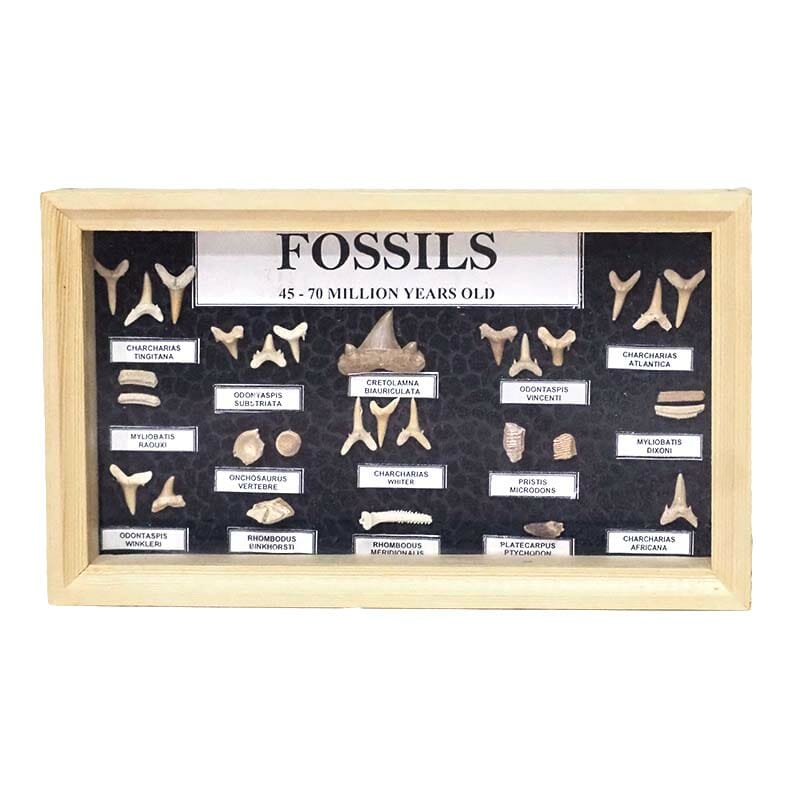
One of Patrik’s first sourcing experiences was in the phosphate regions around Khouribga, a globally significant fossil area. Here, fossilised shark teeth, vertebrae, and bones, dating back approximately 35 to 110 million years, are commonly found.
What makes this region extraordinary is how accessible the fossils are. Rather than being buried deep within mountains, many are found scattered across flat, sandy terrain, a clear indication of how fossil-rich Morocco truly is. The fossils often display soft creamy white to warm butterscotch tones, shaped by millions of years of mineralisation.
This hands-on fossil hunting provides crucial insight into quality, authenticity, and natural variation. Knowledge we bring back to our customers.
Deep in the Mines: Malachite & Azurite
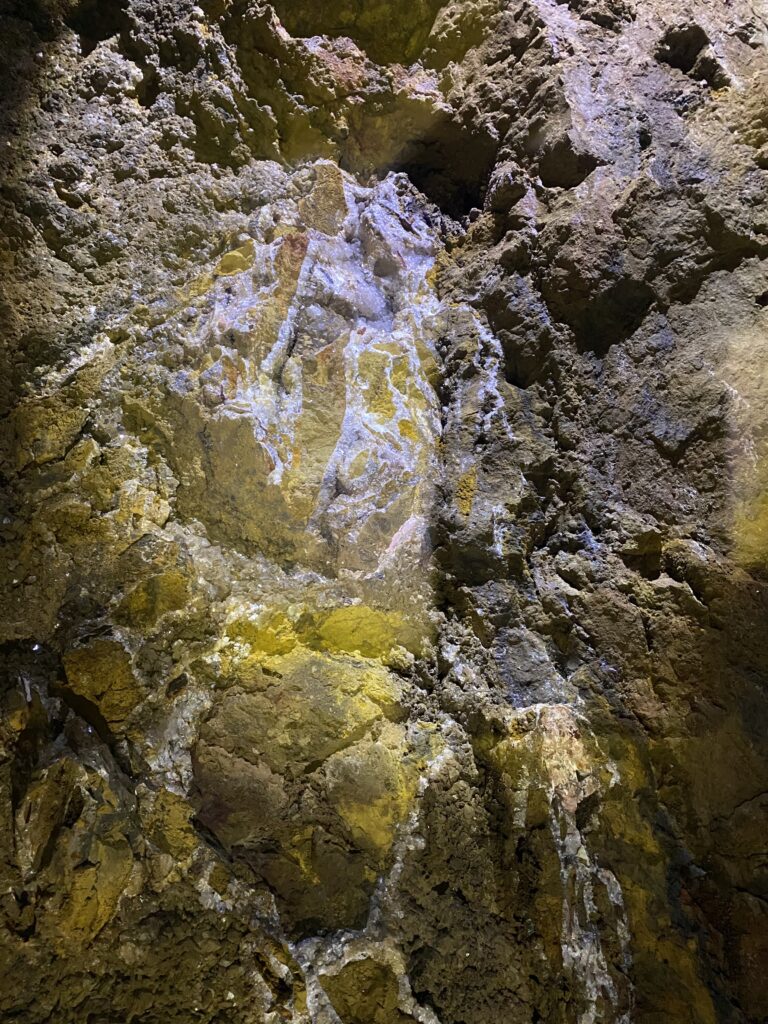
Beyond surface finds, Patrik travelled to the Midelt mining region, where Malachite and Azurite are extracted under extremely challenging conditions.
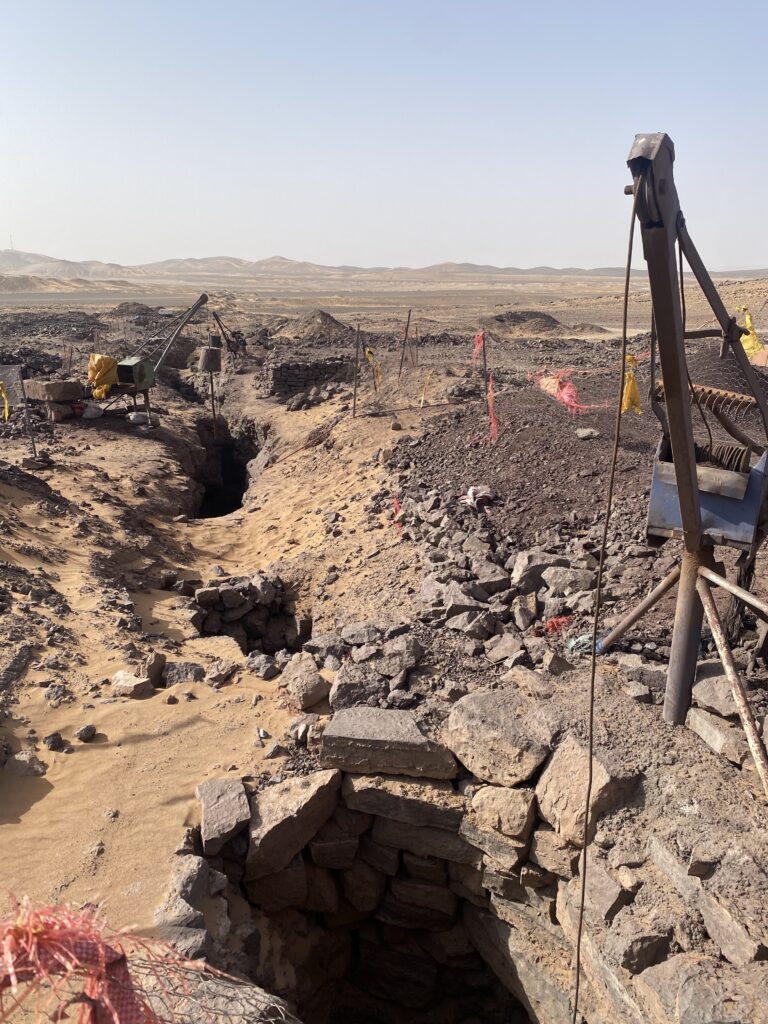
Mining here involves narrow tunnels, unstable rock, minimal light, and constant physical risk. Experiencing these conditions firsthand gave us a deeper appreciation for the labour, danger, and skill involved in extracting these minerals responsibly.
It’s an experience that reinforces why direct sourcing matters, and why every piece carries far more value than what meets the eye.
Ancient Oceans Preserved in Stone
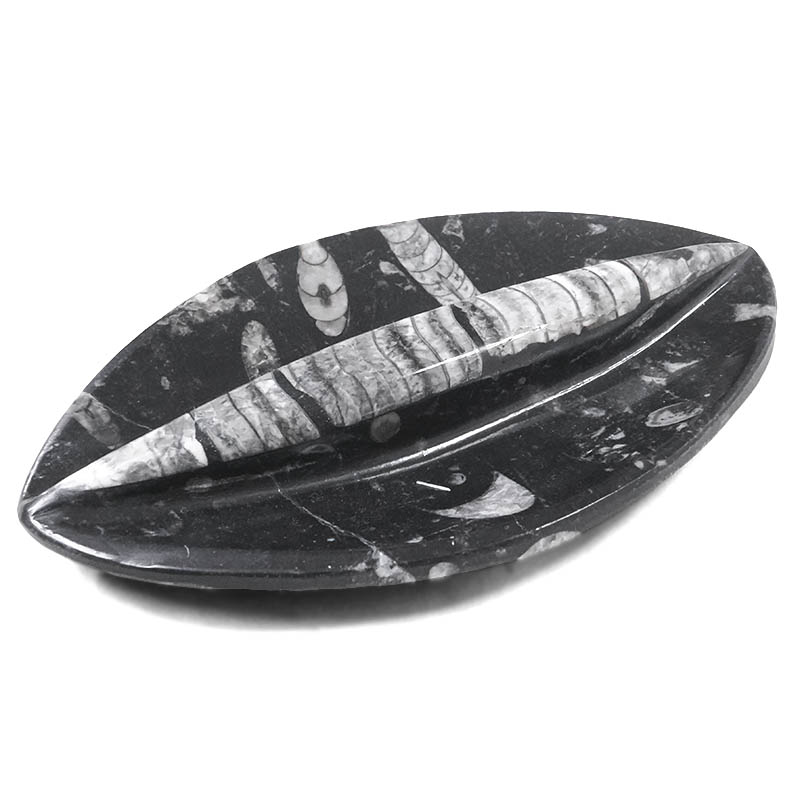
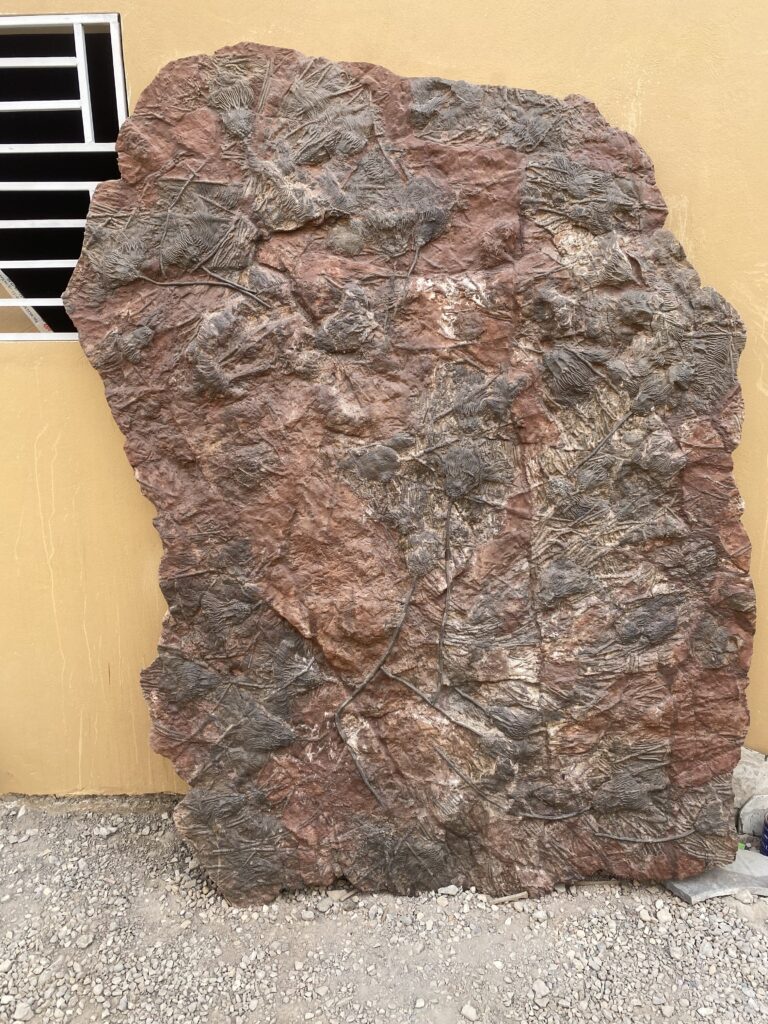
Before heading into the Sahara, Patrik visited local workshops where enormous blocks of Orthoceras and fossil limestone are cut and transformed into tables, dishes, bookends, and decorative pieces.
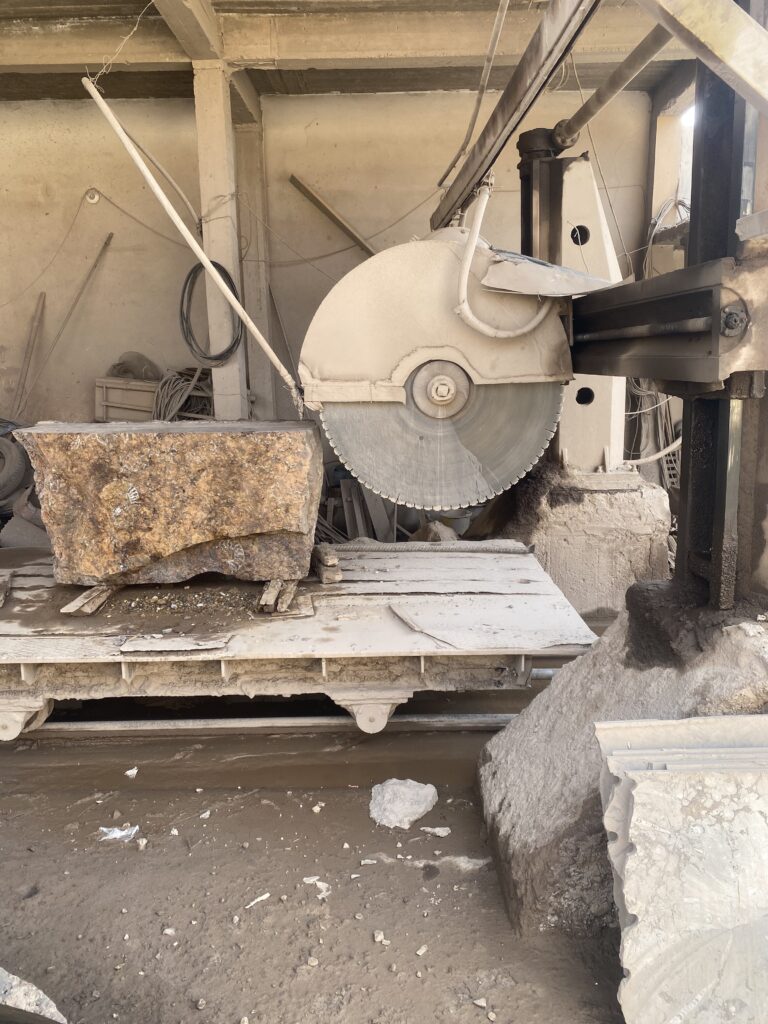
He also visited fossil sites rich in Orthoceras and Crinoids, marine animals that lived over 400 million years ago, long before dinosaurs walked the Earth.
- Orthoceras were prehistoric cephalopods, ancestors of modern squid and octopus, identifiable by their long, chambered shells.
- Crinoids, often called sea lilies, are echinoderms related to starfish and sea urchins, filtering nutrients from ancient oceans with their feathery arms.
These fossils are not only visually striking. They are direct physical connections to Earth’s deep past.
Inside a Selenite Factory
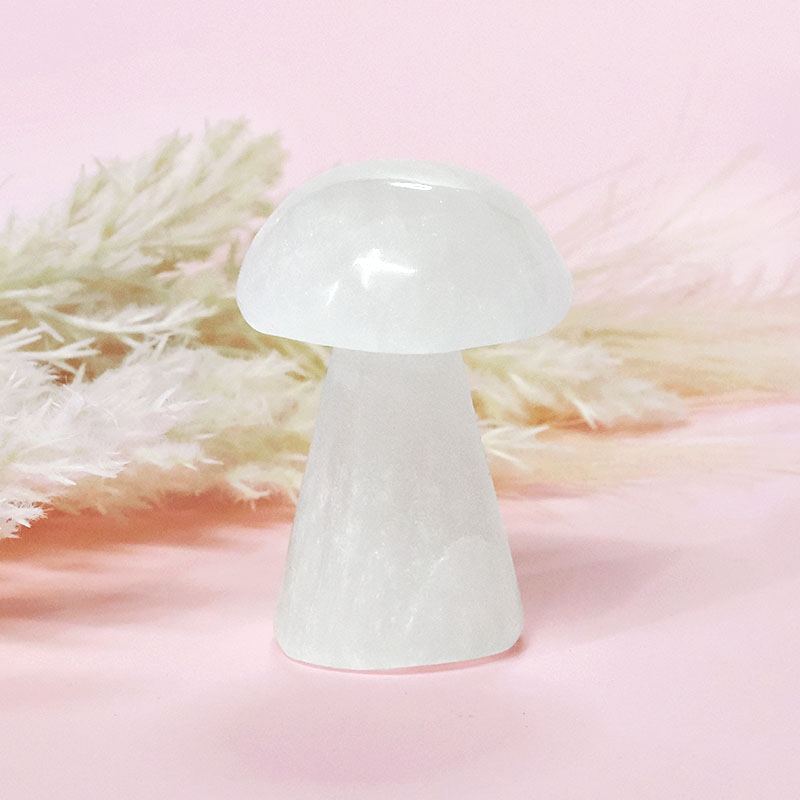
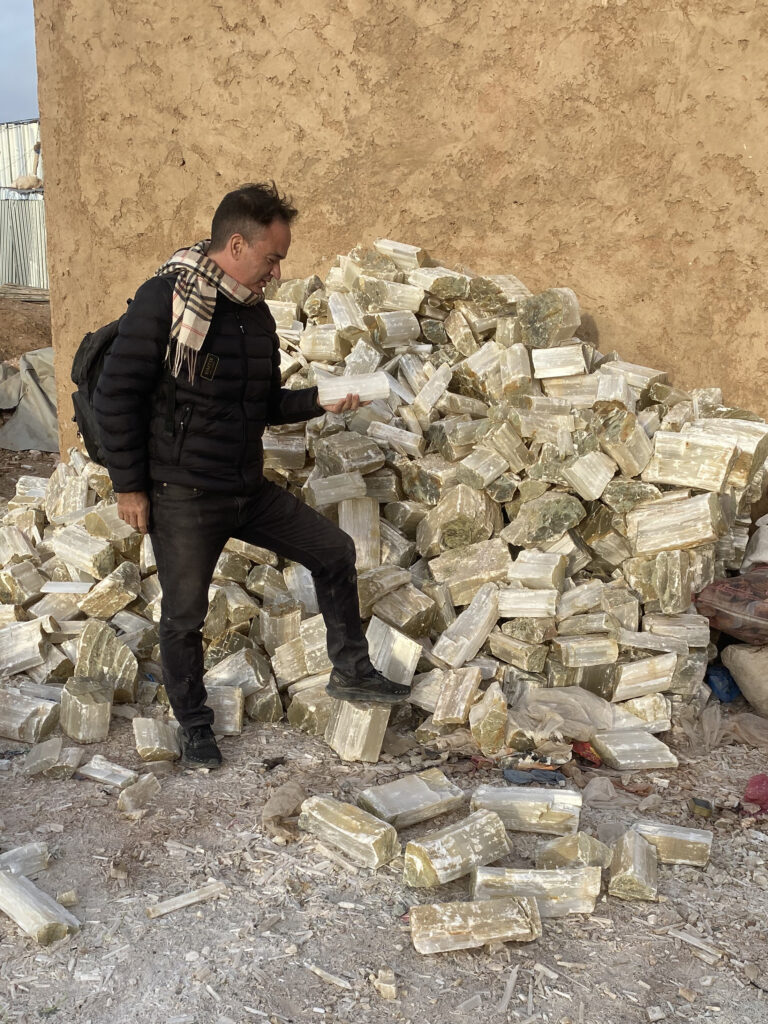
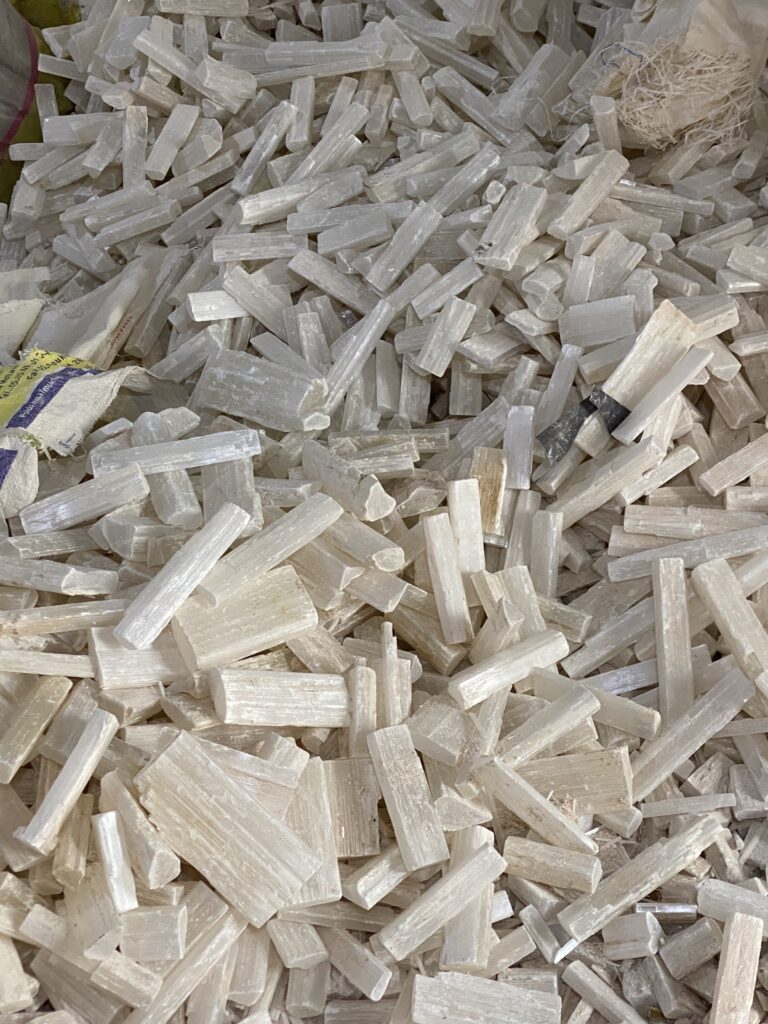
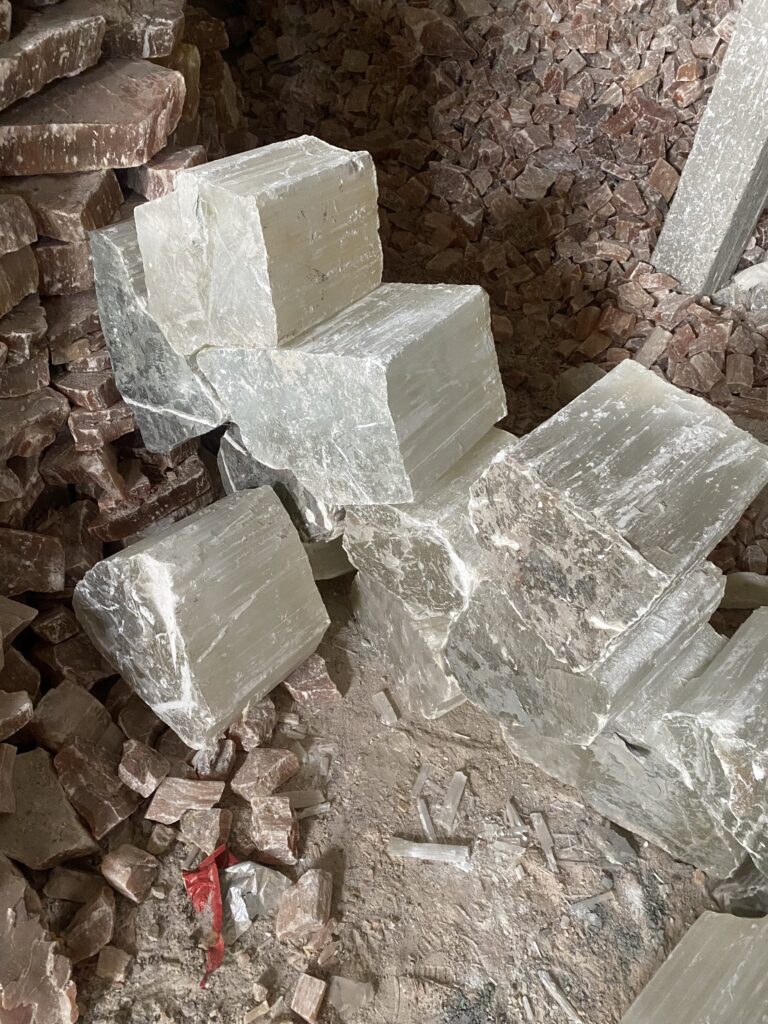
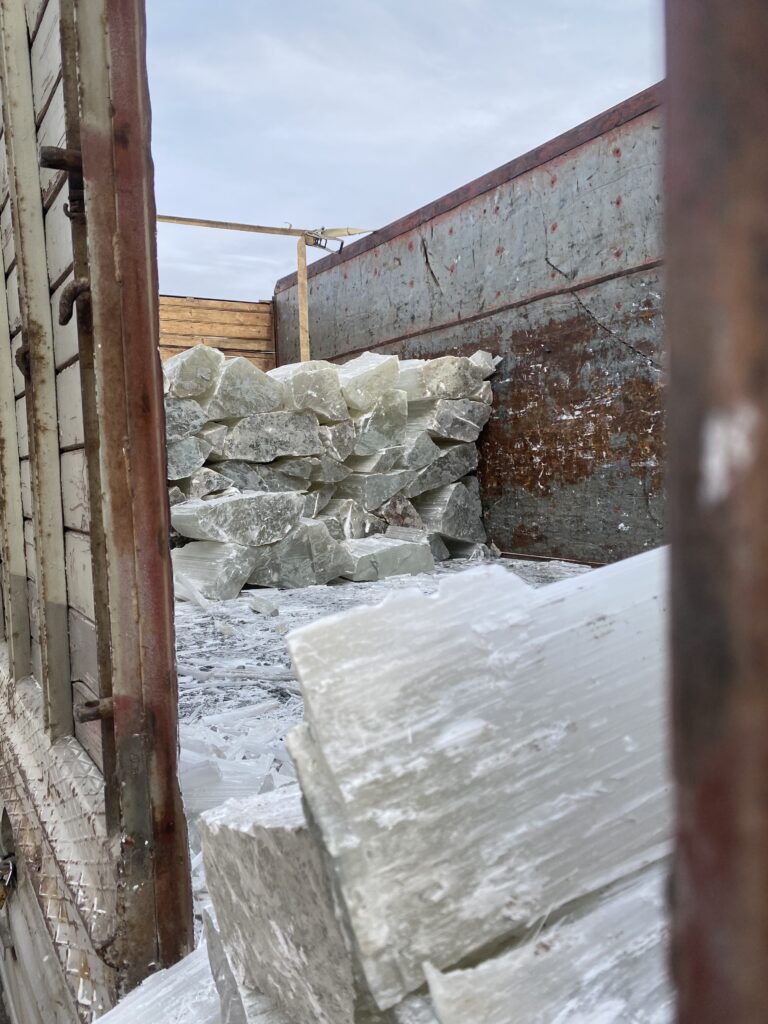
Selenite is one of Morocco’s most iconic mineral exports, and one of our most popular products.
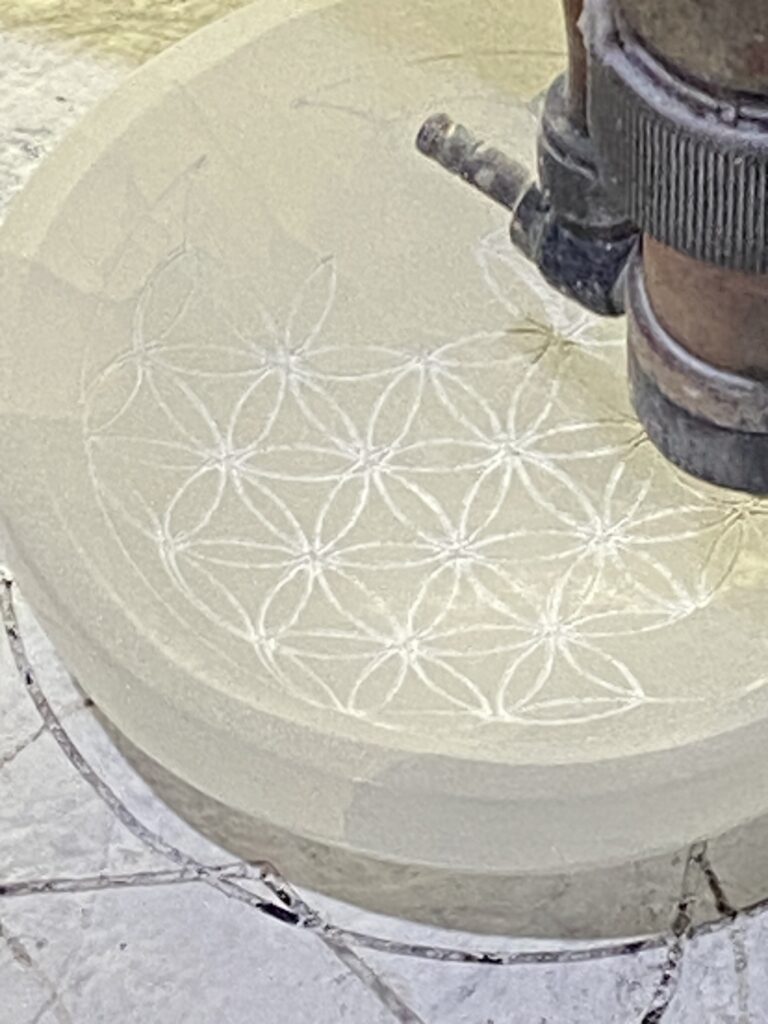
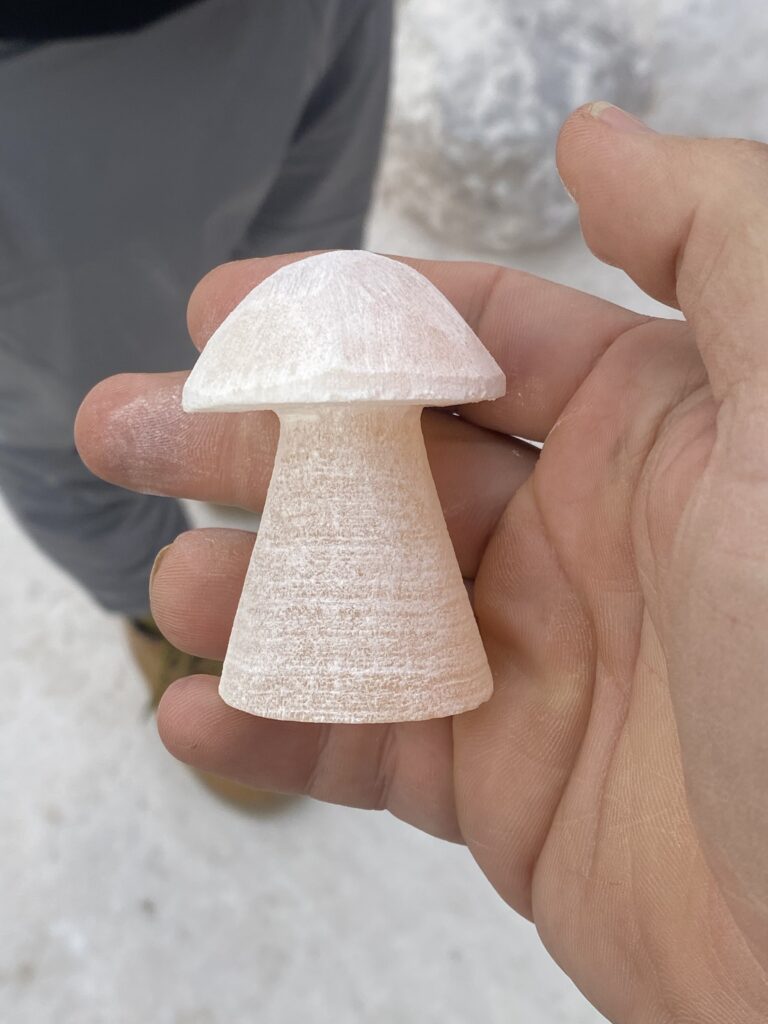
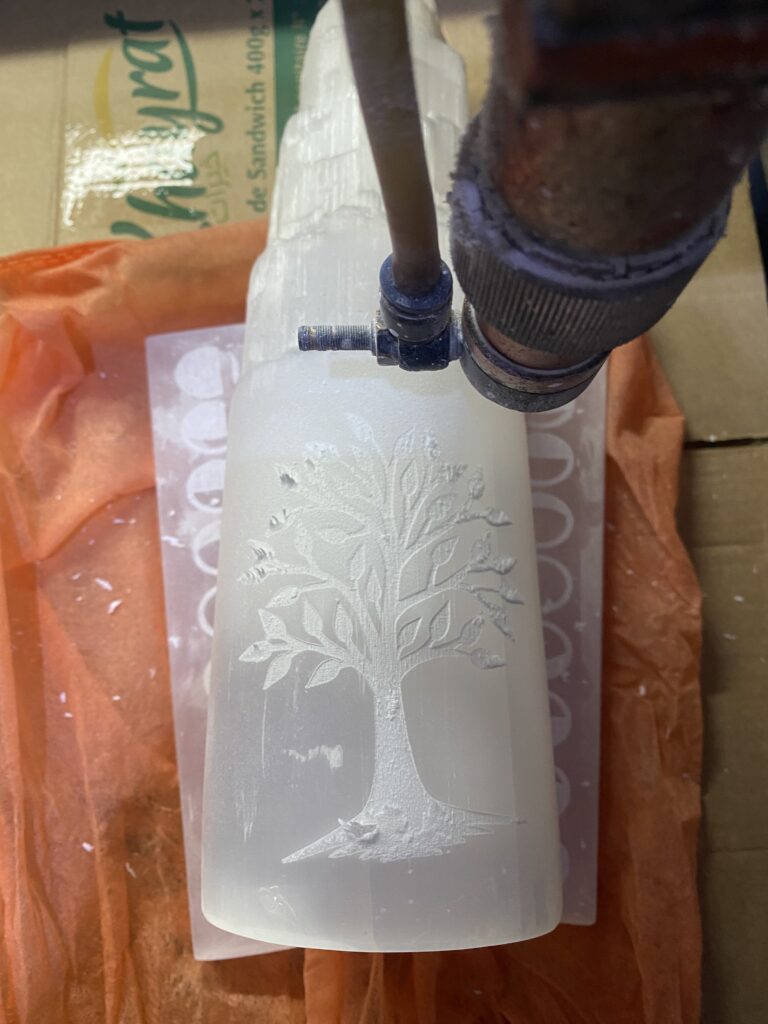
Patrik visited a working Selenite factory, observing the full process from raw material to finished form. Massive selenite blocks are first cut into slabs measuring approximately 40–50 cm wide and 20 cm thick, resembling large timber beams.
During the visit, Patrik also took part in hand-crafting selenite, gaining a deeper understanding of its softness and workability compared to harder stones such as Rose Quartz. This hands-on experience helps guide our design choices and quality standards back home.
The Sahara Desert: Merzouga
No sourcing trip to Morocco is complete without entering the Sahara Desert.
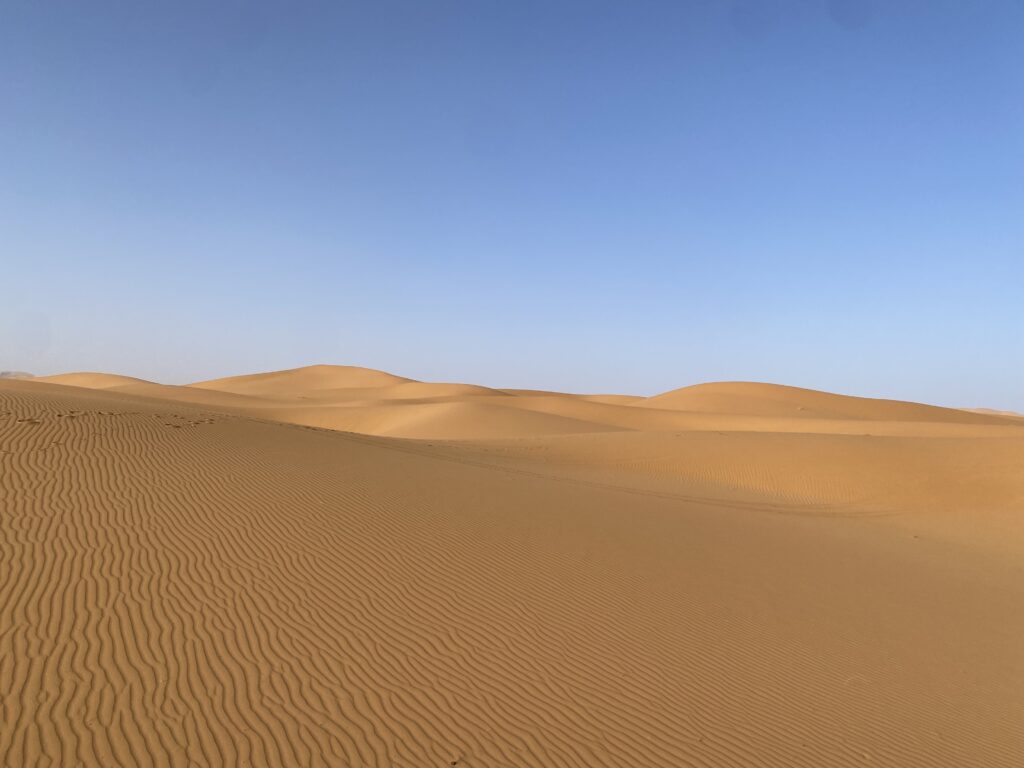
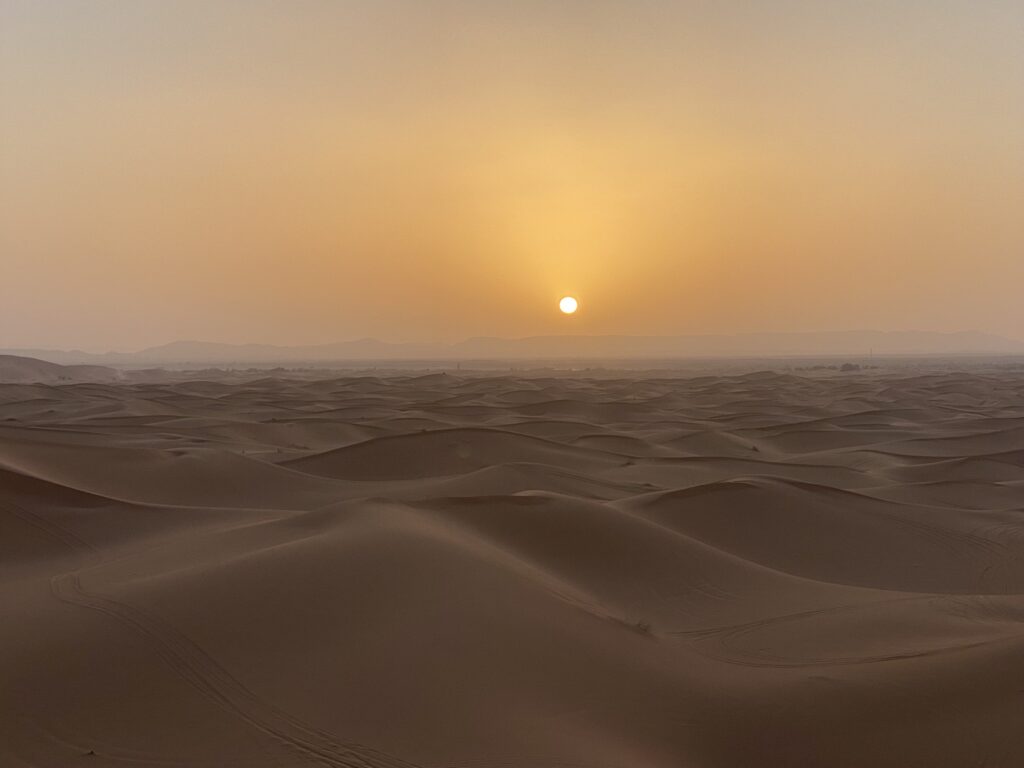
Travelling by camel across the dunes of Merzouga, Patrik experienced the vast silence and scale of the world’s largest desert. The endless sea of sand feels almost unreal. Timeless, powerful, and humbling.
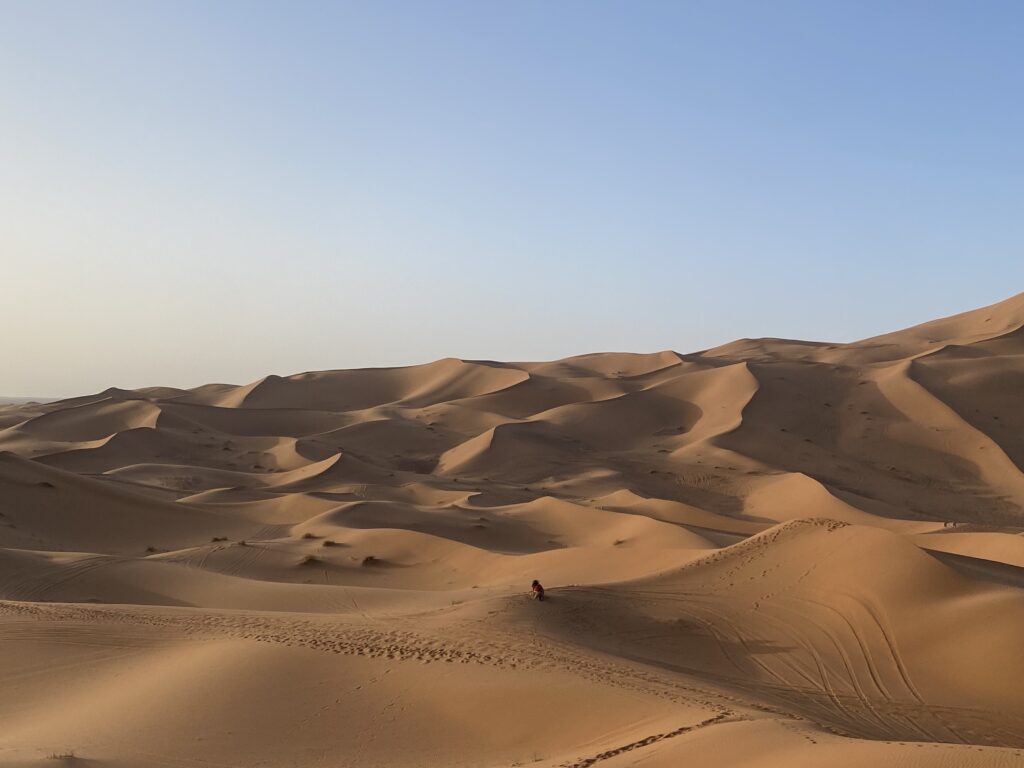
This part of the journey wasn’t just about location. It was about understanding the natural forces that shape this region and its materials.
Marrakech & Cultural Connection
After days in the desert, the journey continued to Marrakech, known as the Red City. Here, Patrik explored cultural and historical landmarks including:
- Jemaa El Fna Square
- Koutoubia Mosque
- Saadian Tombs
Understanding local culture is an essential part of ethical sourcing. Relationships are built through respect, time, and presence, not transactions.
Rare Fossils from Alnif
In Alnif, Patrik met with long-trusted fossil dealers specialising in trilobites and goniatites.
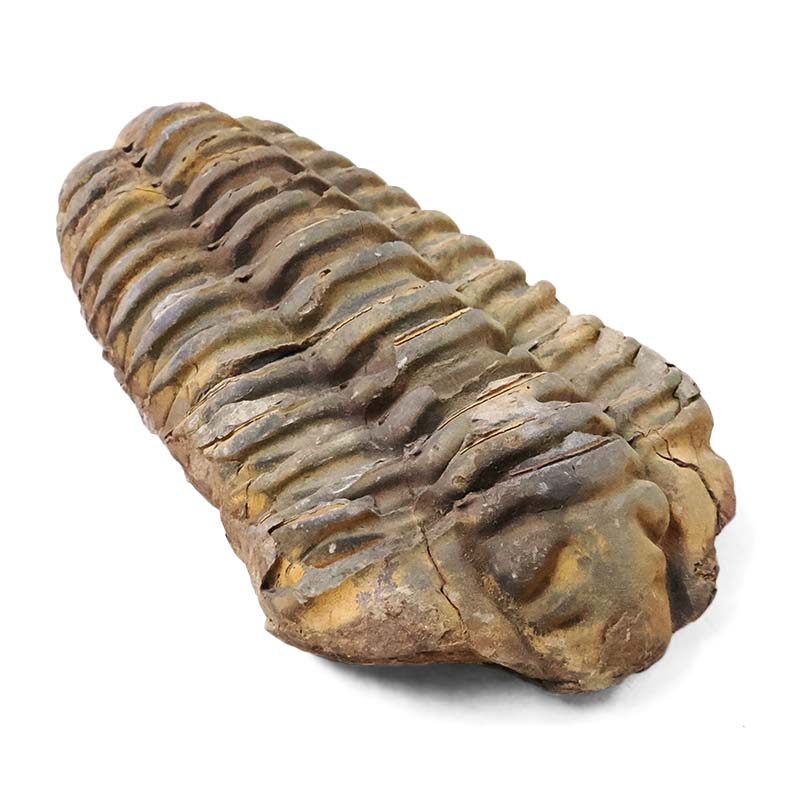
One exceptional find was a Drotops megalomanicus trilobite, dating back around 390 million years to the Devonian Period. Known for its large size, dramatic defensive spines, and detailed surface texture, this species is one of Morocco’s most iconic trilobites.
The specimen displays strong definition and excellent preservation, showcasing the incredible anatomy of ancient marine arthropods.
A Moment of Serendipity: Amethyst in Touama
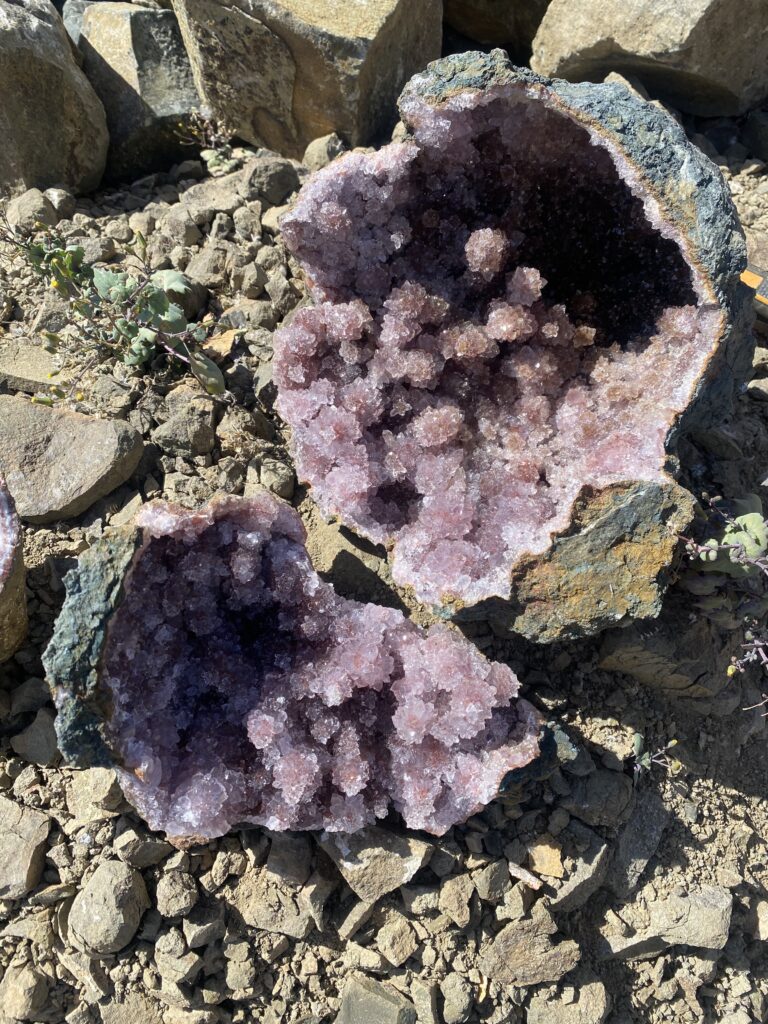
Patrik also visited a small Amethyst mine in Touama. Unlike large commercial operations, this site is a one-off collecting mine rather than a continuous production site.
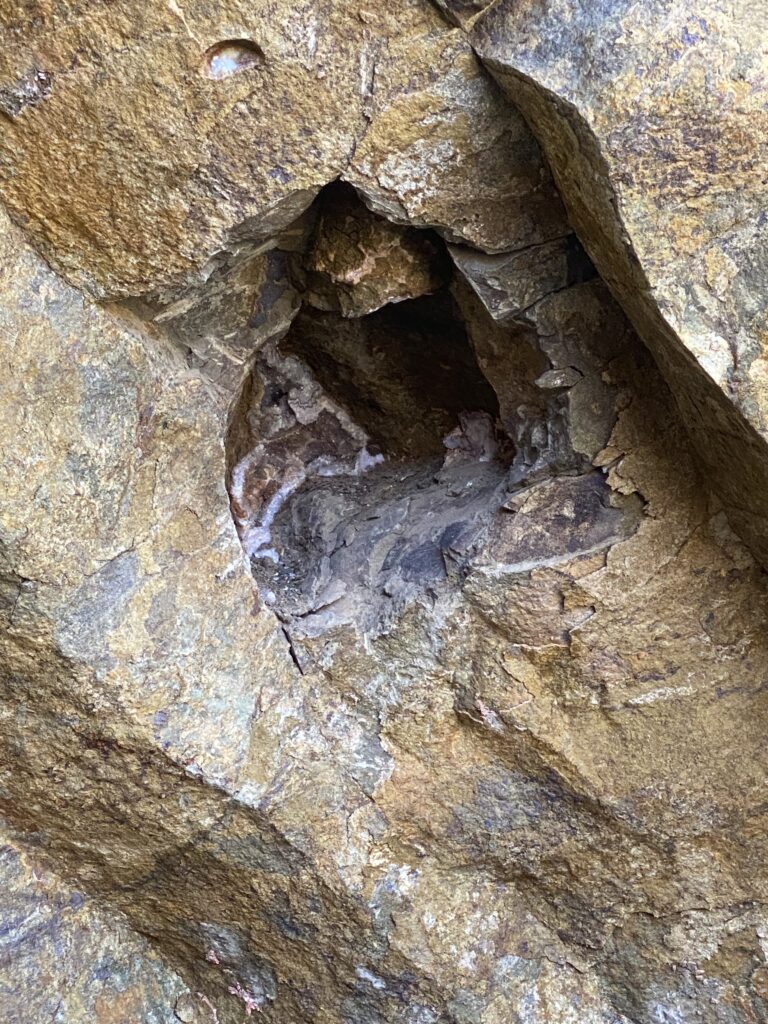
By sheer chance, the guide uncovered a beautiful amethyst specimen during the visit, one that seemed destined to come home, despite limited suitcase space.
It’s a reminder that sometimes you don’t find the crystal. The crystal finds you.
Securing Direct Supply for Australia
Throughout the journey, Patrik met with miners, cutters, factory owners, and local dealers to strengthen direct supply relationships for The Crystal Factory.
Selenite remains one of our most in-demand materials, and we plan to continue importing up to 50 tonnes per year, equivalent to two to three full shipping containers, while developing new designs and exclusive pieces.
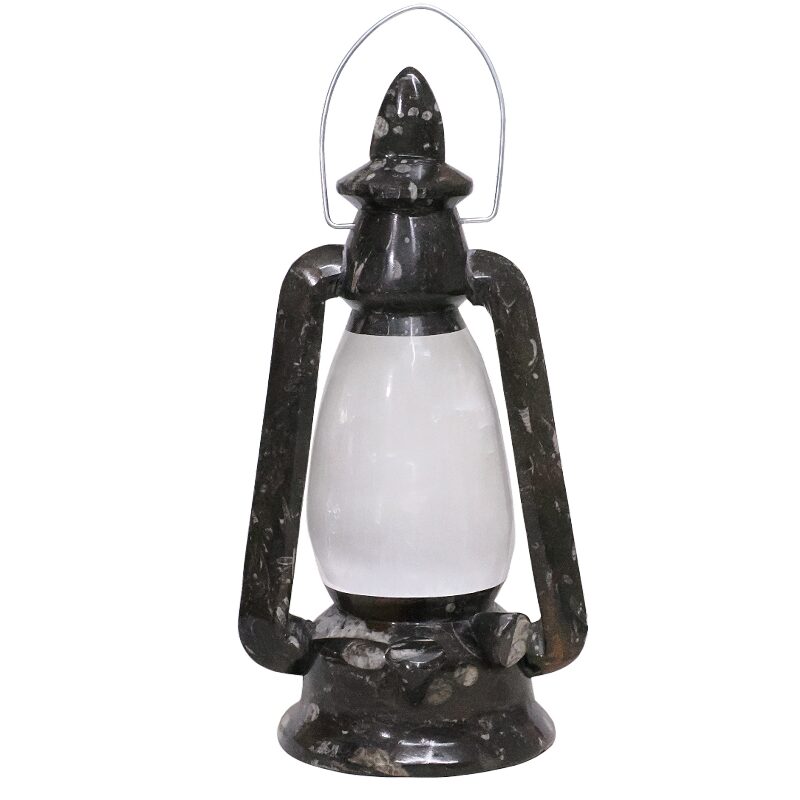
One recent example is our Selenite Orthoceras Lantern Lamp, which has quickly become a customer favourite.
Our Commitment
Every journey we take is about more than sourcing stock. It’s about:
- Quality
- Ethical relationships
- Respect for Earth’s history
By travelling to the source, we ensure that every piece we offer carries a genuine story, from the ground it came from to the hands that shaped it.
This is how we source. This is who we are.